 On eBay Now...
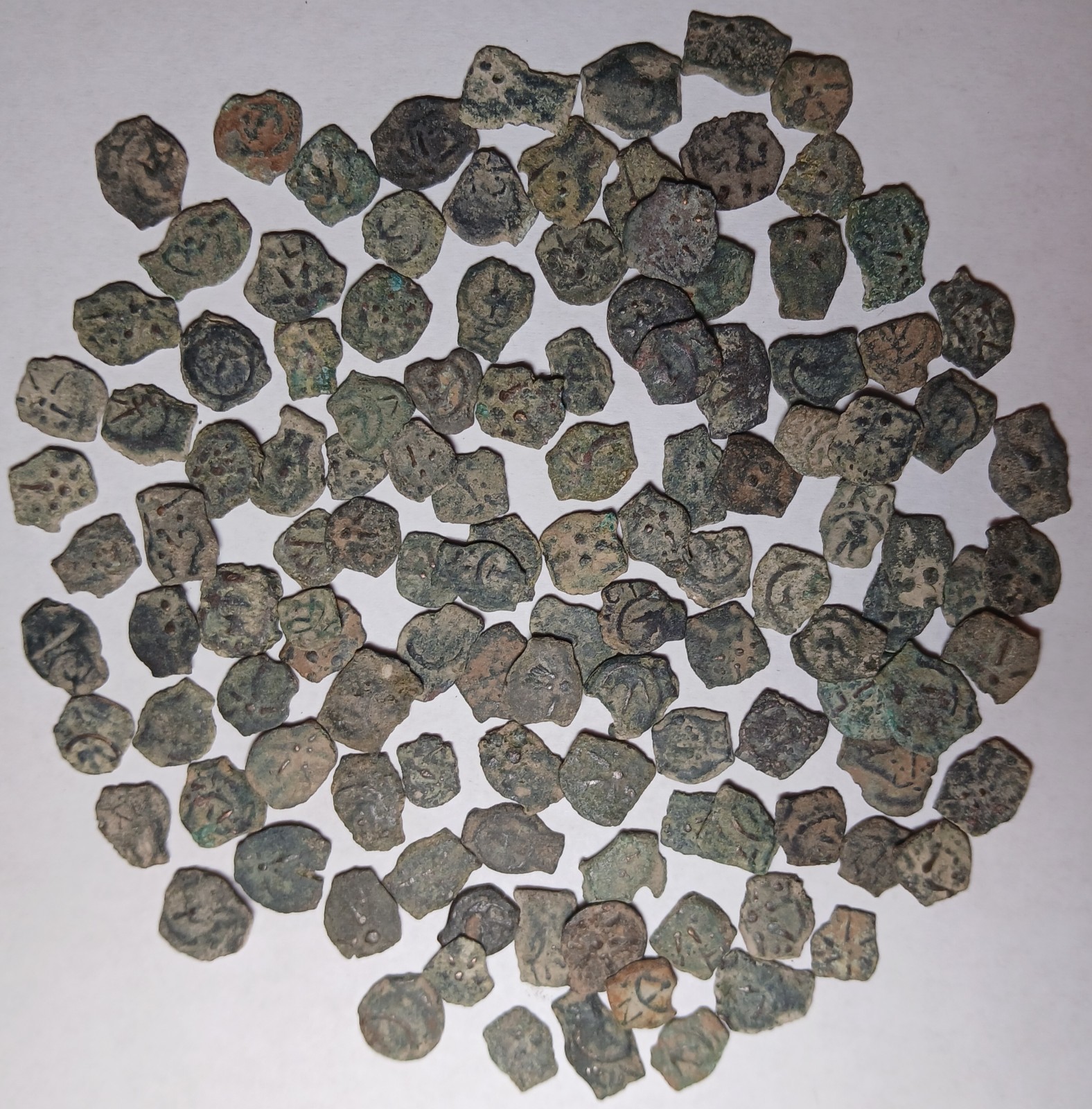

*Note that these are Genuine Widow's Mite lepton coins, NOT the "Widow's mite 'sized'" coins or the modern fakes that some dealers are selling on Ebay.
For each bid you will receive one of the widow's mites from the photo. Discounts for multiple bids, and shipping will be combined.Each coin comes with a signed certificate of authenticity from a senior numismatist and archaeologist.JB HuntAmerican Numismatic AssociationMember #3220181 The Widow's Mite is a coin issued by King Alexander Jannaeus, the Great Grand Nephew of Judah Macabee and the Jewish leader of the Holy Land from 103-76 BC. It is this type of coin that circulated in the Holy Land during the lifetime of Jesus. What makes these coins of great historical and religious importance is that twice in the Bible, Jesus is quoted as telling the story of the poor widow who gave all that she had which was just two mites. This coin is identical to the type of coin the poor widow had. These coins have been known to collectors for hundreds of years as Widows Mites.
"And Jesus sat over against the treasury and beheld how the people cast money into the treasury; and many that were rich cast in much. And there came a certain poor widow, and she threw in two mites, which make a farthing. And he called unto him, his disciples, and saith unto them, 'Verily I say unto you this poor widow hath cast more in, than all they which have cast into the treasury; For all they did cast in out of their abundance, but she of her want did cast in all that she had, even all her living.'"Mark 12:41
"And he looked up and saw the rich men casting their gifts into the treasury. And he saw also a certain poor widow casting in thither two mites. And he said, 'Of a truth I say unto you, that this poor widow hath cast in more than they all; For all these have their abundance cast in unto the offerings of God; but she of her penury hath cast in all the living that she had."Luke 21:1
Judean coins were made by striking long, thin strips of blank metal between two dies. The first coin on the strip was placed between the two striking dies and hit with a hammer. The strip was then quickly pulled until the next coin was in place and the process was repeated. When the strip was completed, the coins were cut apart. Minters were paid according to the number of coins they made, not by the quality of the coins. This crude method of minting resulted in poor quality, off-center coins. They were handled and used in market stalls by villagers, desert traders, holy men and Roman soldiers alike in everyday transactions. The coins typically circulated for very long periods of time and most specimens became worn smooth.
 |
 |
||||||||
|
Genuine Widow's Mite-Ancient Biblical Coin of Mark 12:41/Luke 21:1 with COA For Sale
Genuine Widow's Mite-Ancient Biblical Coin of Mark 12:41/Luke 21:1 with COA
When you click on links to various merchants on this site and make a purchase, this can result in this site earning a commission. Affiliate programs and affiliations include, but are not limited to, the eBay Partner Network. |
And Place This On Your Site:  Emailed to You for Free  Crime - Fantasy - Horror Mystery - Science Fiction  Choose from 1000!  Click the Image! STOCK CERTIFICATES  RealStockCertificates.com  
TRANSLATE
Exclusive Excerpts From:  Click the Image! |


©2008-2010 Copyright Collectibles-Articles.com All rights reserved.
Collectibles Articles Directory
Disclaimer: The information presented and opinions expressed in the articles are those of the authors.
Collectibles-Articles.com and its owners have no responsibility for said content.
Collectibles Articles Directory
Disclaimer: The information presented and opinions expressed in the articles are those of the authors.
Collectibles-Articles.com and its owners have no responsibility for said content.