

 On eBay Now...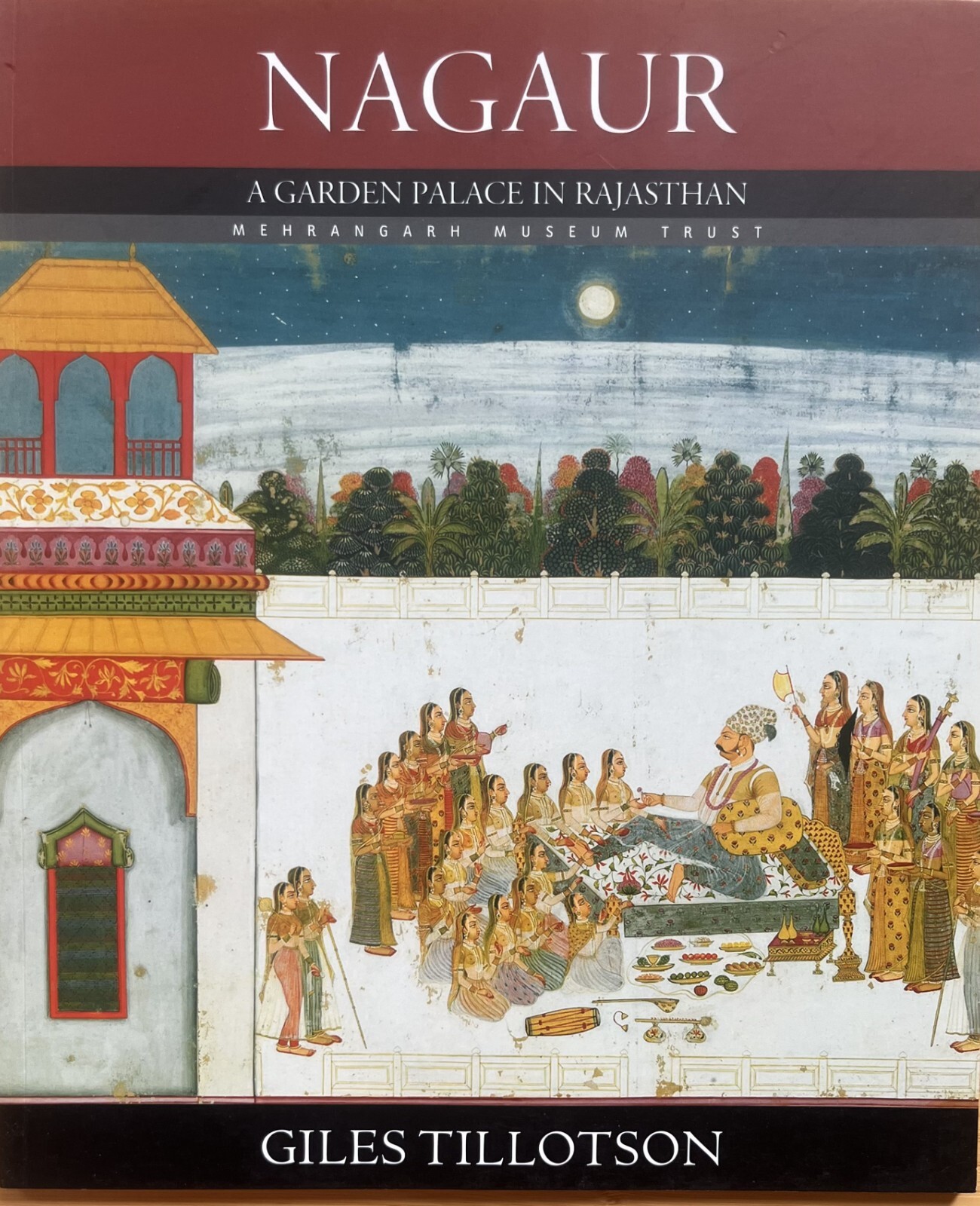

Nagaur: A Garden Palace in Rajasthan by Giles Tillotson, published by the Mehrangarh Museum Trust, is a scholarly yet visually rich guide to one of Rajasthan’s most historically layered but lesser-known royal sites: Nagaur Fort (Ahhichatragarh) and its remarkable garden palace complex. The book places Nagaur within the broader political, architectural, and cultural history of central Rajasthan, positioning it as a crucial crossroads between Delhi, Gujarat, Sindh, and Multan rather than a peripheral provincial town.
The opening chapters, Introduction and City and Fort, trace Nagaur’s long and complex history from ancient foundations through successive periods of rule. Tillotson discusses the city’s strategic importance during the Ghazanavid, Delhi Sultanate, and Mughal eras, before its consolidation under Rajput rulers of the Rathore dynasty. Nagaur’s role as a fortified city, pilgrimage center, and trading hub is emphasized, along with its proximity to major caravan routes and its association with Sufi traditions, including the presence of celebrated saints and religious institutions that drew pilgrims, scholars, and merchants.
The core of the book focuses on Bakhat Singh’s Garden Palace, constructed in the early 18th century by Rao Bakhat Singh, a member of the Rathore ruling family and younger brother of Maharaja Abhai Singh of Jodhpur. This palace, set within the walls of Nagaur Fort, represents a distinctive blend of Rajput and Mughal architectural traditions, especially in its use of formal gardens, water channels, painted pavilions, and ceremonial spaces. Tillotson situates the palace within the wider tradition of garden palaces in Rajasthan, comparing it to other elite pleasure complexes while emphasizing Nagaur’s unique scale and decorative ambition.
A detailed architectural tour of Ahhichatragarh Fort guides readers through key spaces, explaining their original functions and symbolic meanings. Attention is given to painted interiors, audience halls, garden layouts, and residential quarters, as well as to construction materials and techniques. These sections are particularly valuable for readers interested in Indian palace architecture, Rajasthan forts, Islamic–Rajput design synthesis, and 18th-century court culture.
The book also documents the modern conservation programme undertaken by the Mehrangarh Museum Trust, highlighting the fort’s restoration as a major heritage-preservation project in India. This section discusses challenges of conservation, historical authenticity, and adaptive reuse, making the volume relevant to readers interested in heritage conservation, museum studies, and architectural restoration. The transformation of Nagaur Fort from a neglected historic site into an internationally recognized conservation success is treated as a case study in responsible stewardship.
For eBay buyers and collectors, this book is especially attractive as an official Mehrangarh Museum Trust publication by a well-known architectural historian. Search-relevant terms include Nagaur Fort, Ahhichatragarh, Bakhat Singh, Rathore dynasty, Jodhpur, Rajasthan garden palaces, Rajput architecture, Mughal influence, Indian fort restoration, and Giles Tillotson. Combining authoritative text, historical context, and high-quality illustrations, Nagaur: A Garden Palace in Rajasthan is both a collectible reference work and an essential guide to a pivotal but often overlooked chapter of India’s architectural and dynastic history.
Condition and Shipping:
- Paperback, 8"x9" with no dust jacket, 2010, 68 pages. Tight and square binding. Clean pages with no readily visible underlining or writing.
- I combine shipping. I have been selling books, coins, sports cards and other collectibles for more than 20 years.
- All items securely packed.
- Please note: If ordering internationally please request a more accurate weight for your package.





