

 On eBay Now...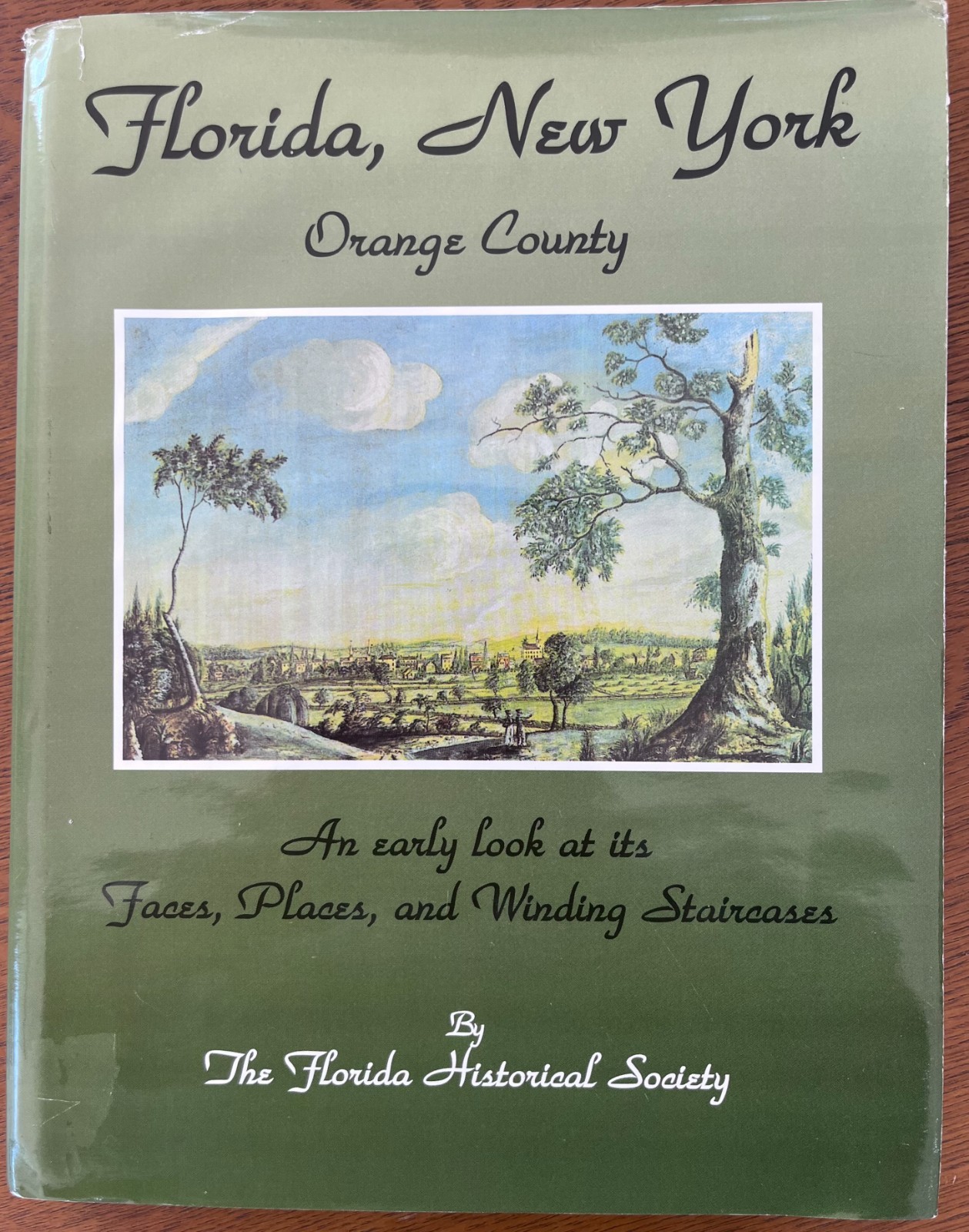

Florida, New York, Orange County: An Early Look at its Faces, Places, and Winding Staircases by The Florida Historical Society. A richly illustrated local history of the Village of Florida, this volume documents the people, buildings, roads, and institutions that shaped one of the Hudson Valley’s historic communities from the 18th through early 20th centuries. Drawing on early maps such as the 1903 Mueller’s Atlas of Orange County, archival photographs, postcards, cemetery records, and family histories, the book reconstructs daily life and the built environment of Florida and its surrounding rural landscape.
The narrative places the village within broader American history, including the American Revolutionary War and the American Civil War, while also emphasizing local institutions such as the First Presbyterian Church, the Methodist Episcopal Church, St. Edward’s Roman Catholic Church, and Temple Beth Shalom. It explores early settlement patterns through figures like Johannes and Elizabeth Wisner, as well as prominent local families including the Sewards, notably William H. Seward and Samuel Sweezy Seward.
A major focus is the architectural and geographic development of the village, with detailed documentation of pre-1903 buildings and their locations across key roads and corridors. Locations covered in the book include Big Island Road, Bridge Street, Glenmere Avenue, Highland Avenue, Jayne Street, Jessup Road, Jessup Switch Road, Main Street North, Main Street South, Maple Avenue, Meadow Road, Minturn Road, Mount Eve Road, North Route 94, Pulaski Highway, Randall Street, Roe Street, Rose Street, Round Hill Road, Route 17A, Seward Highway, Snufftown Road, Spanktown Road, Taylor Road, Union Corners Road, Vandervoort Street, Wheeler Road, and Willet Street.
The book also explores civic and economic life, including mills such as Randallville Mills and Zebulon Wheeler Mills, early Florida physicians and Vernon’s Apothecary, local schools including Washington Academy and one-room schoolhouses, and community organizations like the Florida Fire Department and Florida Water Works Company. Cultural and social history is reflected in sections on artisans, early baseball teams, and the region’s famed Black Dirt agricultural area.
Illustrations include early views such as a watercolor by Alexander Jackson Davis depicting the village circa 1820–1822 (from The Metropolitan Museum of Art collections), as well as artwork by James Amore portraying rural Warwick. The volume integrates maps of the Florida School District and detailed charts of streets and properties, making it a valuable genealogical and topographical reference.
An important resource for collectors of New York regional history, Orange County genealogy, Hudson Valley architecture, and small-town American studies, as well as residents and historians interested in the evolution of Warwick and its surrounding communities.
Publisher: The Florida Historical Society, Florida, New York
Date of publication: 2002
Format: Hardcover, illustrated
Pages: approximately 255 pages
ISBN: 0-89824-971-6
Condition: Tight and square binding. Clean pages with no readily visible underlining or writing.





