

 On eBay Now...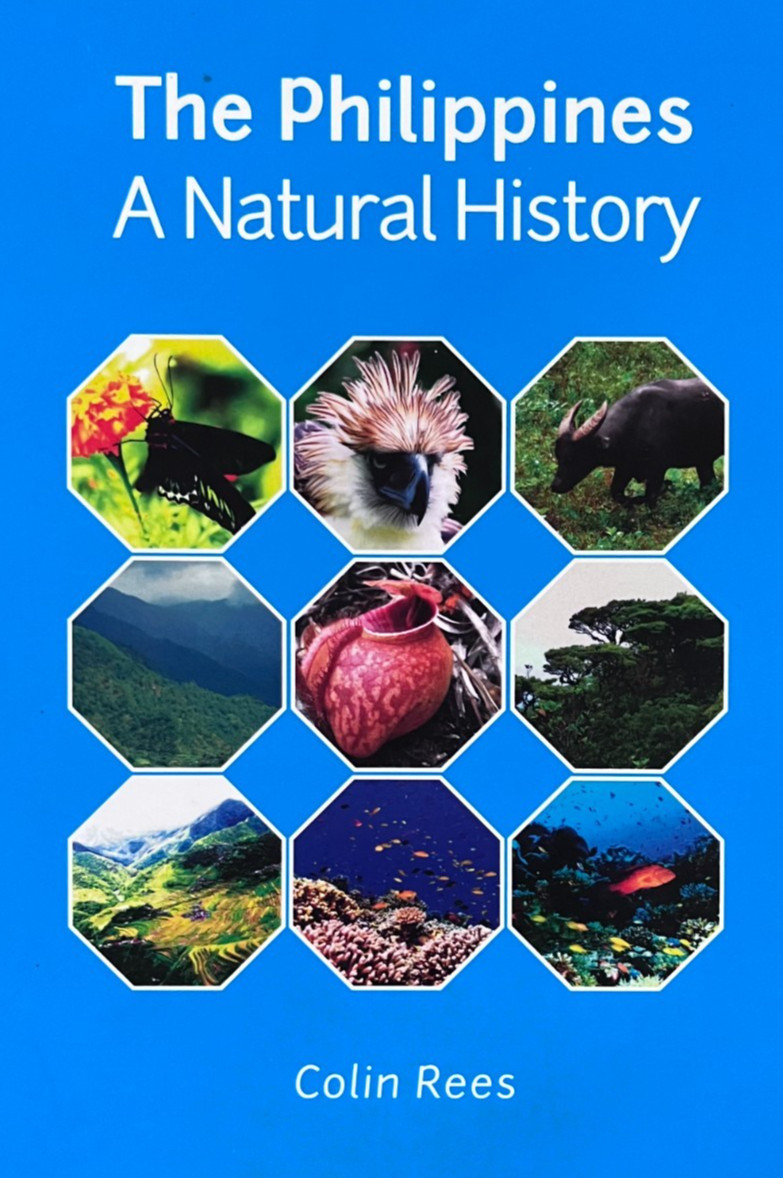

The Philippines: A Natural History by Colin Rees, published by Ateneo de Manila University Press, is a comprehensive, scholarly narrative that explains how the Philippine archipelago was formed, how its extraordinary biodiversity evolved, and why it is now among the most environmentally threatened regions in the world. Written after decades of research and field experience in the Philippines, the book integrates geology, climate science, biogeography, ecology, and human history into a single, coherent account of the natural foundations of the nation.
The narrative opens by situating the Philippines—long known as the “Pearl of the Orient Seas”—within its complex geographic and tectonic setting. Rees explains how the country’s position along the Pacific Ring of Fire, shaped by the interaction of the Philippine Sea Plate, Eurasian Plate, and associated fault systems, produced an archipelago of more than 7,000 islands. Detailed chapters on topography examine major regions including Luzon, Mindoro, the Visayas, Mindanao, Palawan, and the Sulu Archipelago, showing how mountain ranges, volcanoes, deep ocean trenches, and shifting land bridges laid the groundwork for biological isolation and endemism.
Climate and oceanography play a central role in the book’s narrative. Rees describes the influence of the Asian monsoon system, El Niño–Southern Oscillation, ocean currents, tides, and sea-level fluctuations on rainfall patterns, coastal ecosystems, and human settlement. These forces, combined with tectonic uplift and erosion, created a mosaic of habitats ranging from lowland dipterocarp forests and mangroves to montane cloud forests, coral reefs, and seagrass beds. The author emphasizes how the interaction between land and sea has been fundamental to the Philippines’ ecological richness.
At the heart of the book is an extensive treatment of biogeography and biodiversity. Rees traces the evolutionary history of Philippine flora and fauna, explaining how isolation, island size, and ecological niches produced exceptionally high levels of endemism. Chapters on biodiversity profile major ecosystems, vegetation types, and representative species, including iconic and endangered animals such as the Philippine eagle (Pithecophaga jefferyi), alongside lesser-known plants, mammals, birds, reptiles, and marine organisms. Scientific names are used throughout, with Tagalog, English, and binomial nomenclature carefully documented in the appendices.
Human history is woven into the later chapters, which examine prehistory, early settlement, and the development of indigenous cultural groups whose livelihoods were shaped by forests, rivers, and seas. Rees discusses how agriculture, population growth, logging, mining, coastal development, and modern infrastructure have dramatically altered ecosystems. The book documents the accelerating loss of habitats and species, highlighting the Philippines as a global biodiversity hotspot under threat.
The concluding chapters focus on protected areas, conservation policy, and environmental governance. Rees evaluates national parks, marine reserves, and conservation priority areas, while addressing the legal frameworks and institutional challenges facing environmental protection. The final chapter offers a sober assessment of environmental degradation alongside a call for informed stewardship, arguing that understanding the Philippines’ deep natural history is essential to conserving its rapidly diminishing natural resources.
Richly supported by data tables, figures, appendices, and a substantial bibliography, The Philippines: A Natural History stands as both an authoritative reference and a narrative synthesis, linking deep geological time, living ecosystems, and human responsibility in one of the world’s most biologically important nations.
Book Details:
Paperback (about 7" x 10"), 348 pages, 2016. Tight and square binding. Clean pages with no readily visible underlining or writing. Mild shelfwear to cover and overall mild wear.
I combine shipping. I have been selling books, coins, sports cards and other collectibles for more than 20 years. All items securely packed. If ordering internationally please request a more accurate weight for your package.
Contact me any time...
We can be contacted at any time through eBay messages if you have any questions, comments or product requests. We will respond to you within 24 hours and do our best to help you out! We encourage our customers to contact us with any questions or concerns! We'd like to be sure you are completely satisfied with your purchase.
Some more details...





