 On eBay Now...

View Video here
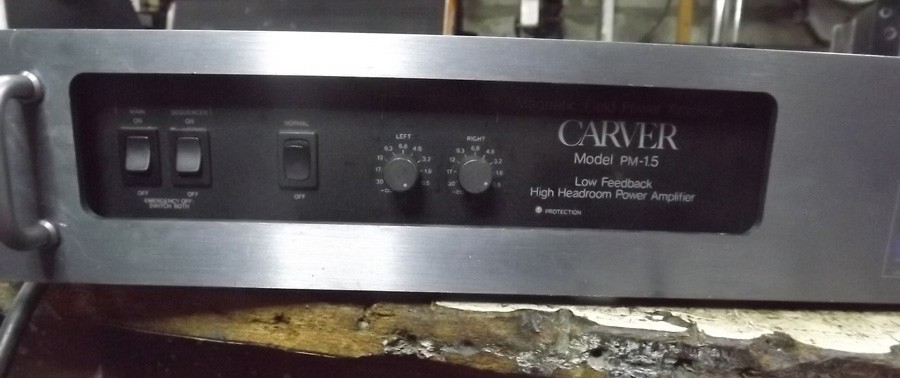
This Carver 1.5 is one of the cleanest I’ve ever seen. It has not had a repair performed on it in 25 years. All components are original. No cleaning was necessary.
The amplifier has been calibrated, volume controls cleaned (potentiometers), LED lights have been replaced with new amber. The original LED’s where somewhat dimmed after decades of use. Display card has been modified to allow full LED ladder extension up the power chain. (i.e. bottom LED’s will go out as power climbs to the next set of LED’s directly above the bottom two), just like the M-1.0t, M-1.5, M-1.5t), (see video). The original design was to keep the two bottom LED’s on at all times. These where the green LED’s.
Amplifier audio power path has not been modified in any way. As a side note, you should consider keeping your amps powered on. The reason why is humidity. Corrosion needs three things to happen. Metal, (and the amp of course has metal), oxygen (and there’s nothing we can do about that, and humidly or condensate. Keeping the amp powered on will slightly elevate the temperature of the amp, thus fighting humidity and this defeats corrosion. This amp had no corrosion but I’ve seen amps that do. The original design of the amp was to keep the fan running whenever the amp was turned on. Fan control has been upgraded to power on only when the amp is in use. When the amp is sitting idle or using moderate power, the fan will not run. A temperature switch turns on the fan at 50 degrees Centigrade. This is somewhere above warm and less than hot for the amp. At rest, or room temperature, this amp will be totally quiet, the bottom two amber LED’s will be on and the fan will not be running once the amp cools.The problems with keeping the fan always running when the power to the amp is on (original design) are these. First of all, you don’t need to cool the amp when it’s already cool from resting at idle. Second, if the fan constantly runs 24/7 the fan will wear itself out much sooner and then start to make noise. Who needs to hear fan noise or fan bearing noise when the room is quiet? Thirdly, whenever the fan is running drawing air through the amp, it’s also bringing dust with the air. This dust goes everywhere, and over the years will foul the heat transfer surfaces, contaminate the volume controls and clog the bearings of the fan. Carver made amps that produced 350 watts a channel, (namely the PM-900, the M-1.5, and the M-1.5t) and none of these amps had a fan. They were able to do this because of Carver’s very efficient design. This amp also uses that same very efficient design in this PM-1.5 resulting in the production of large audio power with very little waste heat being generated. The fan will run very seldom as a result and only if you’re using the amp at high or max wattage levels. When that’s the case, you’re not going to hear any fan noise or probably the neighbors pounding on the door, or you’re wife nagging you (in my case) for that matter.
Carver was big on headroom or reserve power and this amp has it. Speakers produce sound through motion of the cone. The thing is, objects in motion tend to stay in motion, and when the music demands that the direction of that motion reverses, the amp plays a real part in making that happen. IMHO this amp tightens up the music by being the domineering power element. The amp takes control of the speaker and you can appreciate that at any volume level.
Audio is coming through a pinhole mic on an iPhone, so it in no way represents the sound coming from the Dahlquists which is detailed and clean.
View Video here
 |
 |
||||||||
|
carver pm 1.5 amplifier, refurbed For Sale
carver pm 1.5 amplifier, refurbed
When you click on links to various merchants on this site and make a purchase, this can result in this site earning a commission. Affiliate programs and affiliations include, but are not limited to, the eBay Partner Network. |
And Place This On Your Site:  Emailed to You for Free  Crime - Fantasy - Horror Mystery - Science Fiction  Choose from 1000!  Click the Image! STOCK CERTIFICATES  RealStockCertificates.com  
TRANSLATE
Exclusive Excerpts From:  Click the Image! |


©2008-2010 Copyright Collectibles-Articles.com All rights reserved.
Collectibles Articles Directory
Disclaimer: The information presented and opinions expressed in the articles are those of the authors.
Collectibles-Articles.com and its owners have no responsibility for said content.
Collectibles Articles Directory
Disclaimer: The information presented and opinions expressed in the articles are those of the authors.
Collectibles-Articles.com and its owners have no responsibility for said content.